lundi 13 octobre 2008
"Die Kindchengestalt" of Konrad Lorenz in Estonian Politics
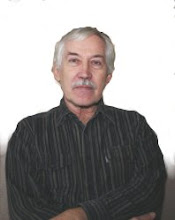
Mart Laar is probably the best-known and appreciated Estonian politician in the conservative circles in the West. He may even be more popular abroad than at home. Why? I think that as he has not much concrete things to do in the West, he can there charm his colleagues with his childish look, his happy smile, the smile of a boy he suddenly is brought into limelight, applauded and praised for his good behaviour. As far as I can remember, Margaret Thatcher once told that Estonia was the best pupil in the post-Soviet school. Well, Laar is the model schoolboy in this school. And at least part of his popularity can be connected with his image that could well serve as an illustration of the famous idea of Konrad Lorenz: that we humans (and possibly other mammals too) are influenced, our caring instincts are roused by some features common to most little mammals -- human infants, kittens, lion cubs, bear cubs... I doubt whether a leader of a big country could profit from his/her Kindchengestalt, but for a leader of a tiny nation such features could be useful. As for his/her nation in some points of history.

El Emeth -- God of Truth
A small Torah commentary.
There are believers and non-believers, and for some religions, belief and non-belief are most essential things. For Lutherans, our salvation depends on our belief. It's different in Judaism. Here, we must keep in mind, that Truth can be more important than God. God is the God of Truth, and in such compound words the second word is the "lord", and the first word is the "servant". God is the God of Truth, not vice versa. Truth is truth independendly of God, but God is God because he is dependent of truth. As the angels Gabriel, Ariel, Uriel and others are angels, messengers of God, carrying some of his attributes, e.g. Uriel is the angel of divine light, God himself is a god of truth, he carries the truth. And as it is written in Thillim -- Psaumes (XXXI, 7), the author gives his spirit into God's hand, into the hand of God of Truth.
As God is the God of Truth, our attitude to Truth is more important than our attitude to God. If we deny or don't accept the Truth as it is, if we try to hide it, to ideologise or theologise it, it is no more a truth, and it is idolatry, deviation from the truth. If our truth makes it impossible for us to believe in God, it is a lesser evil than to try to remodel the truth in such a way that there is a place for a God in it. The God of Truth can well be the God of an atheist, but not a God for somebody who is afraid to accept the Truth of his existence or non-existence.
dimanche 12 octobre 2008
USSR inside USA
Following the republican campaign in the US, I cannot but remember things I have followed in my childhood and youth. I mean Soviet anti-American, "anti-imperialist" propaganda. Both are strikingly similar, at least the Republican conservatives and the Christian Right remind me of Communist ideologists, commissars and politruks. Yes, sometimes there is no big difference between fanatical Christians and fanatical Atheists. The world view of both of them is Manichean, built on the idea of an irreconcilable war between the forces of Evil and Good, ideas originating in ancient Iran. For a true Soviet citizen, a "Soviet believer" there were no compromises, he/she had to be uncompromising in his/her fight against imperialists, fascists, nationalists, cosmopolites, etc. He/she had always to be vigilant to discover the enemy ploys, to unmask him. And every rude word was good for the enemy. Because this enemy was an offspring of the Devil. And a good Christian cannot have any contacts, make any deals with the Devil. This is the point. There are adversaries, opponents, even enemies with whom you can make war, but also make peace. But you cannot make peace with an absolute enemy, i.e. with the absolute Enemy who is the Devil, Satan. There is the age-old battle between him, the Prince of darkness, and God of light. Once it will end with the final victory of the Good. This is what the radical Christian right wing believes and this is quite similar to what the radical Bolsheviks believed. They too believed into the last battle that will liberate mankind... As far as I know, there are similar tendencies, similar politruks and fanatics at work in the Islamic world, professing an as uncompromising battle against the Devil and his forces, the Americans, the Zionists, the unbelievers, the false believers as did the Bolsheviks. An uncompromising, merciless battle with lots of bombs exploding in marketplaces, many heads with godless ideas in them cut off, many rockets fired at enemy mosques and churches.
I am more or less an atheist with a strong interest for religion and theology. I can very well communicate and socialise with people who believe in God, communism, liberalism or whatsoever. But I cannot communicate with people believing in Satan's existence. I think I have proven that if you believe in Satan, then you can believe in anything and often also do anything, commit nearly any crime... I grew up in a society where we had to believe in Satan, in the absolute evil of American imperialists and their henchmen (although most of us didn't believe). And I have the feeling that such beliefs are becoming stronger in the US. It makes me feel uneasy.
My grandfather, headmaster of a small country school, lost his job in 1903. He had told his pupils that we humans are descendants of apes, and he had shown to his class pictures of these apes. Somebody among the students' parents had informed the authorities. He had a serious talk with the inspector of schools of the Tzarist ministry of education, and as my granddad was a very straightforward and honest person, he told that he couldn't tell his class anything but the truth and the whole truth of science. Then the inspector told him politely that he should find for himself another job. What he did, becoming a successful businessman.
I think how many such teachers can we now find in the American Bible Belt. How do they solve their problems when confronted with some fundamentalist young-earth-believer from a school board. I dont know. I would like to know.
I am more or less an atheist with a strong interest for religion and theology. I can very well communicate and socialise with people who believe in God, communism, liberalism or whatsoever. But I cannot communicate with people believing in Satan's existence. I think I have proven that if you believe in Satan, then you can believe in anything and often also do anything, commit nearly any crime... I grew up in a society where we had to believe in Satan, in the absolute evil of American imperialists and their henchmen (although most of us didn't believe). And I have the feeling that such beliefs are becoming stronger in the US. It makes me feel uneasy.
My grandfather, headmaster of a small country school, lost his job in 1903. He had told his pupils that we humans are descendants of apes, and he had shown to his class pictures of these apes. Somebody among the students' parents had informed the authorities. He had a serious talk with the inspector of schools of the Tzarist ministry of education, and as my granddad was a very straightforward and honest person, he told that he couldn't tell his class anything but the truth and the whole truth of science. Then the inspector told him politely that he should find for himself another job. What he did, becoming a successful businessman.
I think how many such teachers can we now find in the American Bible Belt. How do they solve their problems when confronted with some fundamentalist young-earth-believer from a school board. I dont know. I would like to know.
jeudi 9 octobre 2008
On Moral Rights
To be very concise. There are certain things certain people have no moral right to deny to others. We Europeans have no moral right to say that Israel has no right to exist. And the members of the biggest organization of unmarried males in the world -- i.e. the Catholic Church has no moral right to say that the women have no right to use contraceptives or turn to abortion.
mercredi 8 octobre 2008
La chose la plus importante?
Peu-ā-peu je commence ā comprendre que la vie et la mort ne sont pas d'une importance si capitale que nous ne le croyons. Il y a une chose plus importante encore. Et c'est ... le sourire. Ou bien le rire. Le culte de la vie et de la mort dans la culture chrétienne et post-chrétienne est une triste erreur qui n'a pas rendu impossible ni l'inquisition, ni les massacres ā Verdun ni le Holocauste, mais a rendu presque impossible d'aider les gens qui ne veulent pas continue de vivre une vie devenue pire qu'un cauchemar. Et notre abolition de la peine capitale et l'interdiction de la torture (qui l'a souvent rendu simplement plus sophistiquée) sont ā part annulées par notre résistance irrationnelle et obstinée ā l'euthanasie. J'ose mème dire qu'il nous faudrait aider les autres à vivre ou à mourir, s'il le veulent, mais il faut le faire d'une telle manière qu'ils puissent vivre ou mourir en souriant.
samedi 4 octobre 2008
Three languages
In politics, we use three distinct versions of language. There is the language of diplomacy where such terms as "territorial integrity", "non-interference in internal affairs", "sovreignty", "human rights" are used. Then there is the language of propaganda. Here we can hear phrases as "unprovoked aggression", "democracy", "freedom", etc. And there is the cold language of (geo)political realities where we talk first of all about national interests, raisons d'état. In the former Soviet zone of "chasse libre" the use of these languages is seriously flawed. Some politicians even seem to believe that the main language is the language of propaganda, and are creating a manichean picture of the evil dictatorial Russia confronting the free and democratic West, first of all the "New Europe". The problem is that there are very few people in our countries capable and willing to explain things in the realistic language of geopolitics. Formally we have a centre of defence policies in Estonia, but unfortunately even they tend to use mostly a more rational-looking language of political propaganda, defending mainly the US propagandistic stances, and, in its own way, the American interests. We have to switch to US own sources, e.g. to Stratfor, to understand what is really going on. The US have never wanted a strong power emerging in Eurasia, be it one state or a bloc of states. And the enlargement of NATO and support for anti-Russian forces in the former Soviet bloc states are a means to contain the possible rise of Russia. But this de facto continuation of the containment policies once formulated by George Kennan were not accompanied by a credible build-up of armed forces. Thus, when the US ground forces are bogged down in Iraq and Afghanistan, and the Georgian president Saakashvili (who was the only one generously armed by the US) behaved very irresponsibly, Russia used its window of opportunity and taught Americans and their clients a lesson. Some Russia's neigbours seem to have learnt it well, and what we shall probably see in near future is a rapprochement between Ukraine and Russia. I have very little hope that the Estonian politicians will even change their anti-Russian rhetoric or that they are able to see clear in what is really going on in the world. But without such a clear vision, any reasonable politics is impossible. What is possible, and what our politicians practice, is more or less blind adherence to US interests and the US political propaganda. As we can see from the fiery rhetoric of Mme Kristina Ojuland, our former minister of foreign affairs.
A Cold War Recollection
As a kid, I had not much to read, thus I read nearly everything I could get in my hands. Including a lot of Soviet propaganda literature, mostly published as belles-lettres. From one of them I still remember some verses:
Enne valimisi Truman andis sõna:
ainsat neegrit enam võlla ei või tuua.
Pärast valimisi lahti laskis mõna:
nüüd vaid paarikaupa tohib neegreid puua.
Before the elections Truman gave his word:
not a single negro can be brought to gallows.
After the elections he let loose a talk:
From now on you can hang negroes only in pairs.
The original Estonian is as clumsy as my English.
After all, the world has changed a lot. The book was published about 1950.
Enne valimisi Truman andis sõna:
ainsat neegrit enam võlla ei või tuua.
Pärast valimisi lahti laskis mõna:
nüüd vaid paarikaupa tohib neegreid puua.
Before the elections Truman gave his word:
not a single negro can be brought to gallows.
After the elections he let loose a talk:
From now on you can hang negroes only in pairs.
The original Estonian is as clumsy as my English.
After all, the world has changed a lot. The book was published about 1950.
Inscription à :
Articles (Atom)