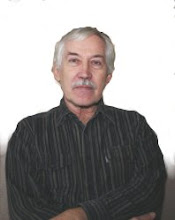
Патриархъ
Кириллъ посещаетъ Эстонию. Прочиталъ
его биографiю, познакомился съ нҌкоторыми
его высказыванiями. Думаю, что въ общемъ
и цҌломъ онъ позитивный старикъ. Онъ
выходецъ изъ потомственной семьи
священниковъ, его дҌдъ и отец были
настоящими мучениками из-за своей вҌры.
Такимъ образомъ онъ и его церковь, должно быть,
являются гарантами того, что неосталинистамъ
не удастся прiйти къ власти. И консервативное
государство, гдҌ клерикалы имҌютъ
огромное влиянiе на государственные
дҌла, намного лучше безчеловечной
тоталитарной диктатуры. Самодержавiе
было лучше большевизма,
клерикально-консервативный режимъ
Доллфусса и Шушнигга в Австрии былъ
лучше нацизма. И консервативно-клерикальная
Россiя лучше неосталинской.
vendredi 14 juin 2013
vendredi 7 juin 2013
стыдно быть человѣкомъ
У моей внучки теперь
чинчилья, милое маленькое животное,
которая спокойно можетъ сидѣть на нашихъ
рукахъ. Гладя ея удивительно мягкую
шерсть я опять думаю о томъ, что мнѣ
стыдно быть человѣкомъ. Вѣдь одинъ видъ
чинчильи истребленъ, оставшіеся два
подъ угрозой изъ-за браконьерства.
Убиваютъ ихъ изъ-за ихъ мѣха... Еще одинъ
примѣръ того, какъ мы изъ-за алчности,
жеманства и глупости истребляемъ,
испортимъ все живое вокругъ насъ.
Когда мы переселились
въ домъ на окраинѣ Тарту, въ Вээрику,
тамъ гнѣздилось много ласточекъ. Люди
въ домѣ ихъ не любили, вѣдь подъ ласточкины
гнѣзда на стѣнахъ остаются слѣды отъ
ихъ говна. Теперь, навѣрно отчасти изъ-за
нежеланія людей жить вмѣстѣ съ ласточками,
отчасти изъ-за того, что имъ недостаетъ
питанія, отчасти изъ-за того, что ихъ
ловятъ и ѣдятъ на югѣ, гдѣ онѣ
перезимовываютъ, ихъ стало все меньше,
гнѣздъ подъ крышей нашего дома и на
балконахъ нѣтъ.
Я чувствую, что сталъ
мизантропомъ, иногда просто ненавижу
Человѣка, человѣчество, культуру и
цивилизацію, какъ нечистую силу,
уничтожающую все живое на землѣ. А
слѣдовательно – ненавижу и самаго себя,
какъ представителя этого неудавшегося
вида. Страшный парадоксъ, мучащій меня
съ дѣтства.
Надѣюсь, что человѣчество
изчезнетъ, что мы изчезнемъ съ лица
земли раньше, чемъ оно успѣетъ уничтожить,
чемъ мы успѣемъ уничтожить природу,
біосферу. Можетъ быть появится человѣкъ,
готовъ пожертвовать собой за другіе
живыя существа, за чинчильи, за ласточки,
за слоны, новый Іисусъ, Христосъ звѣрей,
Спаситель всего живаго, природы.
vendredi 26 avril 2013
Свинство
По-моему, принудить русскiя школы перейти на эстонскоязычное обученiе въ объемҍ 60 процентовъ просто свинство. Иногда въ свинствҍ можно найти некоторую хитрость, смекалку. Тутъ хитрости, вообще уму-разуму нҍтъ. Мы ведем себя по-советски, а не по-человҍчески. Воспитываемъ себҍ враговъ, какъ въ свое время сдҍлало советское руководство.
jeudi 18 avril 2013
Либеральная революция?
Эстонія стала своеобразнымъ Гайдъ-паркомъ для россійскихъ оппозиціонныхъ политиковъ. Нынѣ у насъ гоститъ Илья Яшинъ, выступая на тему о возможности либеральной революціи въ Россіи. Въ послѣднее время я читаю главнымъ образомъ книги о жизни и событіяхъ въ Россіи сто лѣтъ тому назадъ. И о революціи, которая въ началѣ была либеральной... Обычно, какъ мы знаемъ, она таковой не остается. И часто ведетъ къ гражданской войнѣ, а война уже врядъ ли можетъ быть либеральной.
samedi 30 mars 2013
Tweets with American Accent
Our president Ilves either likes small
scandals or is simply unaware that he sometimes causes them. Not only
irritating economists, but also Latvians and Russians with his
sayings or tweets. Once there were doubts whether his knowledge of
Estonian is good enough for the head of Radio Free Europe Estonian
service. Now he speaks good Estonian, although he would do better not
teaching Estonians how they must engineer and renovate their
language. But this is an internal matter of the Estonian Republic.
His tweets about Russia are not. In his book "The Next Hundred
years" the political analyst George Friedman writes that one
clear aim of the US has always been to oppose the rise of a
superpower in Eurasia, and America's next challenge will be the
reemergence of a more self-assured and aggressive Russia trying to
regain it's former sphere of influence in
Central Europe. Estonia where NATO, i.e. the US can have military bases only one hundred kilometres from St. Petersburg is definitely a country that Russia would very much like to turn into its satellite or at least "finlandise". This is something Estonian politicians are aware of, and have tried to avoid, first of all doing everything possible to integrate Estonia into the Western political and military structures. Estonia is a member of both the European Community and NATO, but neither of these can give us complete guarantees of security, partly due to a kind of an actual or potential special relationship between Russia from the one and Germany and France from the other side. Only the US is able to defend the Baltic states, and soon after Estonia restored its independence our politicians made a strategic decision: to sacrifice some of our independence for security. Such a decision was behind Estonia's signing of a propagandistic letter of support to looming American intervention in Iraq and sending a symbolic contingent of troops to Iraq and Afghanistan. I wonder whether such a decision also plays a role in our president's undiplomatic tweets about Russia. Although he now speaks Estonian nearly without any American accent, he expresses his views, willingly or not with a noticeable American accent. As Friedman and some other analysts have written, America would be (and perhaps already is) interested in avoiding too close a rapprochement between Russia and Europe, the emergence of a "Eurussia" advocated by some politicians on both sides. Thus, America tries to use the East Europeans as a buffer or a wedge to hinder such a development. They try to use anti-Russian sentiments still very much alive in the former Soviet republics and satellite states to block any movement toward "Eurussia". However, sentiments are not something lasting, to use them as an instrument in international politics, they have to be boosted, manipulated, re-ignited. In the Baltic states, the younger generation grown up in the post-Soviet era, doesn't always share the strong anti-Russian feelings of their fathers and mothers. Actually Estonians and Russians are moving close to signing a treaty on their common border. Here, the initiative on the Estonian side has been taken by some of our younger politicians. And it seems to find support of the general public. Most people are tired of the anti-Russian rhetoric of previous decades, and embracing the common sense approach: it is not in the interest of a small country to have unfriendly relations with its big neighbour. But can we exclude the possibility that preserving or even increasing tensions between the Baltic states and Russia are now or in not too distant future in the interests of American global politics? Perhaps not. Steps taken by Russia in its "near abroad", especially if they can be interpreted as simply aggressive and expansionist, can help America to put pressure on its West European allies, forcing them to avoid establishing too close relations with Russia. There are at least two main obstacles on the way to "Eurussia": the (possibly waning) anti-Russian attitudes in Eastern Europe and the extreme nationalists and Stalinists in Russia itself. The latter have a non-negligible influence on the Russian public and consequently on politics, and are relatively easy to provoke. Even by tweets of a president of a small country. Thus, I have the feeling that the tweets of our president about Russia he admonished for not saying its excuses for the annexation of Estonia are first of all interpreted as a provocation by influential people in Russia, and can obstruct the normalization of relations between Estonia and its big neighbour. Thus serving o the geopolitical interests of the US, as far as these are correctly analysed and interpreted by George Friedman and his colleagues. Thus, the interests of Estonia and the US are not always identical. It is hard to believe that a serious conflict between Russia and a small country like Estonia would serve the interests of the latter, but it is quite possible that it would be welcome to the Americans. America can make serious mistakes, and recover from them easily, any serious mistake in foreign policy can do serious damage to Estonia, even put in danger its very existence.
samedi 16 mars 2013
Some Racist Thoughts
In antique times, what is now known as
Cabo São Vicente, the extreme southeastern point of mainland Europe,
was thought to be the end of the world, farther from it there was
only the great ocean where nobody had been and nobody had means nor
courage to venture. I have visited this ancient end of the world,
finis terrae twice, and after
my last trip there I came back as a racist. Seeing all the rubbish
people, I suppose they are mainly tourists from richer European
countries, throw everywhere convinced me that me and my friends from
the one and these happy polluters belong to different races. And
there can be no or very little mutual understanding between them and
us. I think our main differences are not genetic (I don't exclude
this completeley), but memetic. As there are or were different human
genetic races, now slowly mixing and amalgamating, there are
different memetic races, and their number is probably increasing. My
racism arises from the understanding of non-communicability between
the polluters and non-polluters, and led me to an idea that we would
need a kind of a neo-apartheid system, we would profit from not
living in the same areas, sharing the same space. It would nice to
assign the happy polluters, the tourists with their big cars and
dogs, casks of beer, caravans and golf courses to some reservations
or ghettoes. But I understand that people who have some understanding
for nature, and have (consequently?) little understanding for these
individuals of our own species, are very much a minority. And it's us
who need reservations and ghettoes. We and some other animals, many
of them in danger of extinction as the Iberian lynx or even Indian
tiger... In the age of entertainment (including sports) and
bestsellers replacing most of other culture we intellectuals should
think of creating such reservations for ourselves, members of small
tribes incapable of living the life designed for us by trendmakers.
Perhaps we should begin by founding some kind of monasteries as
intelligent people did in the darkest ages of European history. Our
age seems to be very colourful, but it's only the surface. The
coloured rubbish covers the surface and shadows everything that lies
under it, turning everything there into deepening darkness.
mercredi 13 mars 2013
Men as Pets
One of the main problems with feminists
is that they take men too seriously, expect them to behave as
grown-up persons. Unfortunately, men are mostly not grown-up,
responsible people, men are children, adolescents. And, as
adolescents, teenagers, mostly hypersexual. Sexual fantasies and
games are their main interests. Football, golf, war games, policy
games, police games, spy games, business games... To understand men
one should study the game theory. And instead of trying to educate or
re-educate men to become grown-ups, it would probably be better to
take them as they are, eternal adolescents, children and to treat
them as children. Or as pets. And pehaps women would do better not
imitating men and playing their childish games. I think women should
without much fuss begin taking power into their hands, letting men to
remain absorbed in their games, in entertainment, not noticing this takeover of power by women until it's too late to stop
this transfer. But hopefully not too late to remodel our politics and
our economy to save the world from the disaster men have been busy in
preparing for us all.
In fact, men are able, and most often
willing to be good guys, but they can easily be spoilt, either by
neglect, too much care or rejection. Then they turn into bad guys,
and can do a lot of harm. The problem with men is that they cannot be
taken seriously, but they themselves often take themselves terribly
seriously. As most children and teenagers. Conscious of being a man, I try to not take terribly
seriously what I write here.
In the past, women did not have right
to vote. I think it would be worth considering to deny this right to
men, at least to men younger than forty. If I remember correctly,
it's the age Jewish men are considered mature enough to begin to
study the Kabbalah.
Inscription à :
Messages (Atom)